
Ecuadorian cacao is often introduced through a single evocative name: Arriba. Behind that name is a more complex story—one involving the Nacional genetic tradition, regional identity, fine-flavour potential, and the post-harvest decisions that determine whether delicate aroma survives into chocolate.
Arriba Nacional is valuable not because a label guarantees quality, but because it offers unusual sensory possibilities when provenance and process are handled with care. To understand it properly, we need to separate genetics from geography, reputation from verification, and flavour potential from flavour actually expressed.
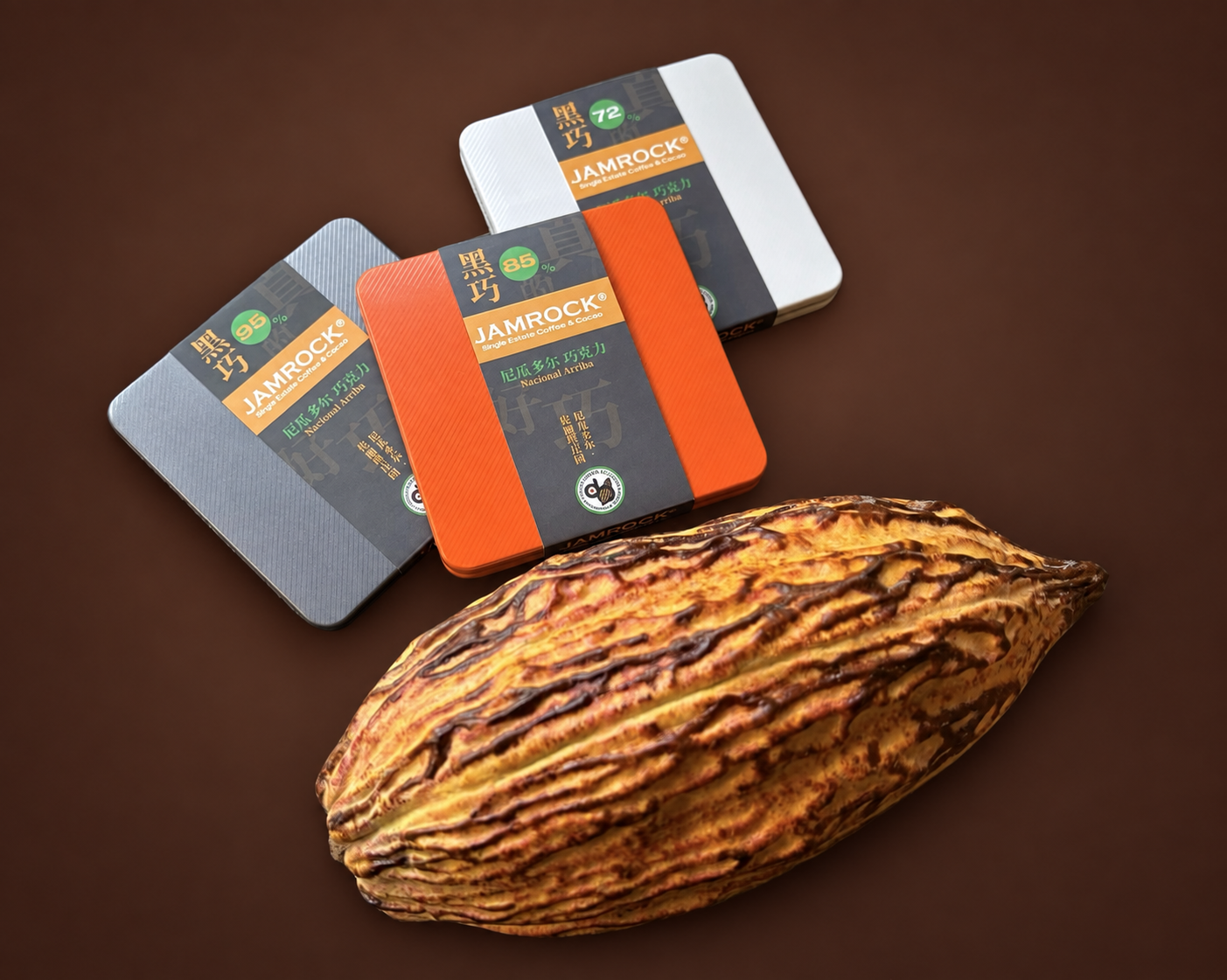
Nacional and Arriba: related, but worth reading carefully
Nacional refers to Ecuador’s historic cacao population and the genetic tradition associated with its celebrated aromatic beans. Ecuador’s National Institute for Agricultural Research, INIAP, describes Nacional as the source of aromatic cacao known internationally as Arriba.
The names are often used together, but they are not a shortcut around traceability. Ecuador also grows other cacao materials, and Nacional populations have changed through selection, disease pressure, replacement, and natural or deliberate hybridization. “Ecuadorian,” “Nacional,” and “Arriba” therefore communicate different levels of information.
A credible Arriba Nacional claim should be supported by more than country of origin. It should be connected to planting material or supplier documentation, a defined growing area, lot separation, post-harvest records, and sensory evaluation. The name becomes meaningful when it identifies a verifiable flavour tradition rather than functioning only as a premium phrase.
Fine flavour is a complete system
The International Cocoa Organization identifies Ecuadorian Nacional as an important exception to the broad rule that fine-flavour cacao is associated mainly with Criollo or Trinitario types. Although ICCO places Nacional within the wider Forastero grouping, it recognizes that Nacional can produce fine-flavour cacao.
That classification is based on sensory expression, not pedigree alone. ICCO’s framework considers genetics, growing environment, farm management, harvesting, fermentation, drying, bean integrity, and the absence of defects. In its April 2024 decision, the organization classified 75 percent of Ecuador’s cocoa-bean exports as fine or flavour cocoa.
Fine flavour is not a variety printed on a bag. It is the result of genetics, place, harvest, post-harvest control, and disciplined evaluation working together.
Reading the sensory architecture
Arriba Nacional is commonly associated with a fragrant, layered profile: floral lift, fruit, a rounded cocoa base, gentle nut or caramel impressions, and relatively elegant bitterness. The most compelling examples feel aromatic without becoming perfumed and complex without losing their fundamental cacao identity.
These are tendencies, not specifications. One lot may emphasize flowers and fresh fruit; another may lean toward cocoa, nuts, dried fruit, or spice. Soil, shade, rainfall, tree age, harvest maturity, fermentation, drying, storage, and roast design can all change the balance.
This is why sensory evaluation should move beyond searching for one signature note. A more useful assessment considers:
- Aromatic clarity: are floral and fruit impressions distinct or blurred by smoke, mould, excessive acid, or storage?
- Cocoa foundation: does the chocolate character support the aromatics without becoming flat or aggressively roasted?
- Bitterness and astringency: do they provide structure, or do they dry and dominate the finish?
- Acidity: does it add freshness and definition, or read as sharp residual fermentation acid?
- Finish: do the most attractive notes remain clear after the chocolate melts?
Fermentation turns potential into precursors
Fresh cacao beans do not yet possess the full aroma of finished chocolate. During fermentation, microorganisms transform sugars in the surrounding pulp. Heat and acids move through the bean, initiating biochemical changes that reduce germination capacity, modify polyphenols, and create compounds that later participate in flavour formation during roasting.
Research on Ecuadorian cocoa shows substantial variation among fermentation systems, including the use of bags or wooden boxes, turning practices, pre-drying, fermentation duration, temperature development, and drying conditions. That variation matters because there is no single clock time that guarantees a finished fermentation.
Under-fermentation can leave beans strongly bitter, astringent, or vegetal, with limited roast flavour potential. Excessive or poorly controlled fermentation can suppress delicate origin character and create unpleasant acidic, putrid, or over-fermented notes. The correct endpoint must be judged through process data, cut tests, bean condition, and sensory results for the specific lot.
Drying protects what fermentation created
Drying is not merely a storage step. It continues the movement of acids and moisture while stabilizing the beans for transport. Dry too quickly and acidity may remain trapped or the shell may harden while the interior stays wet. Dry too slowly and mould, unwanted microbial activity, or stale flavours can develop.
For aromatic Nacional cacao, the practical objective is controlled, even drying that preserves cleanliness and reduces moisture to a stable level without smoke contamination or case hardening. Final moisture, water activity, bean uniformity, odour, and internal appearance should be evaluated before a lot is accepted.
Roasting should reveal, not standardize
Roasting develops the familiar chocolate aroma system through Maillard reactions, Strecker chemistry, sugar degradation, and changes to acids and volatile compounds. Research confirms that roasting time and temperature alter pyrazine formation and other properties associated with roasted cocoa character.
The challenge with an aromatic origin is to build enough roast character and reduce undesirable acidity without flattening floral and fruit notes. A roast designed for a robust bulk cacao may be too assertive for a delicate Nacional lot. At the other extreme, an excessively light roast may preserve acidity and raw notes rather than express refinement.
A disciplined approach begins with small trials and consistent evaluation:
- Measure bean size, moisture, water activity, and lot uniformity.
- Evaluate the fermented and dried beans for defects and off-odours.
- Run controlled roast trials with documented time, product temperature, airflow, and weight loss.
- Compare liquor or chocolate samples at the same particle size, formulation, refining condition, and age.
- Select the profile that provides the clearest balance of origin aroma, cocoa depth, acidity, bitterness, and finish.
High-cacao chocolate makes provenance visible
As cacao percentage increases, the bean’s own structure becomes more exposed. Sugar and milk have less influence, so fermentation character, acidity, bitterness, roast balance, and textural refinement become easier to recognize.
This makes Arriba Nacional particularly interesting across a progression of high-cacao chocolates. A 72 percent formulation may foreground sweetness and accessibility. At 85 percent, origin character and roast structure become more prominent. At 95 percent, the quality of the cacao and the precision of processing have almost nowhere to hide.
The strongest formulation is not automatically the one with the highest percentage. It is the one in which cacao concentration, roast, refining, conching, sugar level, particle size, and melt behaviour create the most coherent expression of the selected lot.
What the name should promise
Arriba Nacional should promise more than Ecuadorian origin. It should suggest documented sourcing, genetic and regional intent, careful fermentation and drying, lot-specific roasting, and a sensory profile worth preserving.
Handled this way, the name is neither nostalgia nor decoration. It is a working standard—a reason to ask better questions of the supplier, inspect the beans more carefully, roast with greater restraint, and let the finished chocolate communicate where its flavour began.
Technical references
- International Cocoa Organization: Fine Flavour Cocoa
- INIAP: Catalogue of Cacao Cultivars in Ecuador
- INIAP: Phenotypic Characterization of Ecuadorian Nacional Cacao
- Variations in Ecuadorian Cocoa Fermentation and Drying: Implications for Quality and Sensory Characteristics
- Effects of Roasting on Alkylpyrazines and Cocoa Properties